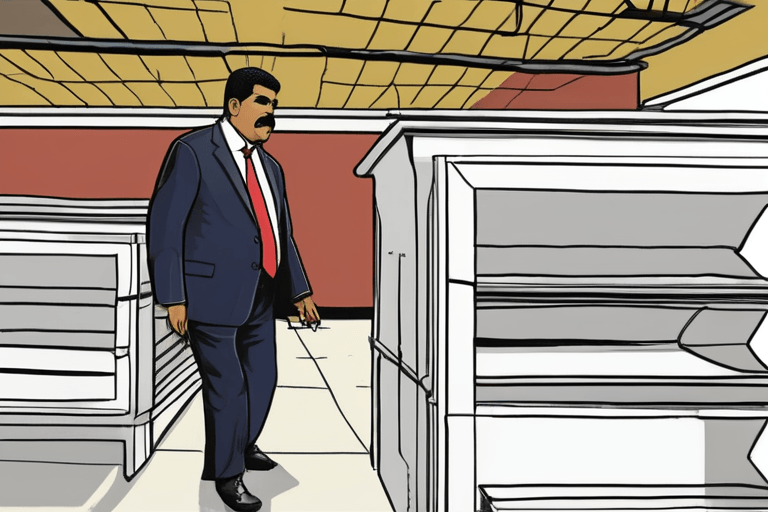
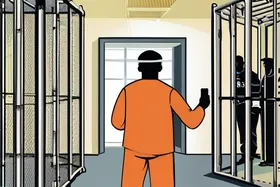
Nicolás Maduro, the president of Venezuela, declared himself a "prisoner of war" after entering a New York City courtroom on Monday for his arraignment. The dramatic scene unfolded as the sound of leg shackles preceded Maduro's entrance, where he addressed a courtroom filled with reporters and members of the public, claiming he had been "kidnapped."
Judge Alvin Hellerstein, 92, immediately asked Maduro to confirm his identity to begin the proceedings. Maduro responded in Spanish, stating, "I am, sir, Nicolás Maduro. I am president of the Republic of Venezuela and I am here kidnapped since January 3rd. I was captured at my home in Caracas, Venezuela." His words were then translated for the court. Judge Hellerstein quickly interrupted, stating that there would be a more appropriate time to discuss the details of his capture.
The 40-minute arraignment took place with Maduro and his wife, Cilia Flores, present. The charges against Maduro stem from a long-standing indictment by the United States government, accusing him of drug trafficking and corruption. These charges are part of a broader effort by the U.S. to pressure Maduro to step down from power, amidst a severe economic and political crisis in Venezuela.
Venezuela has been gripped by turmoil for years, marked by hyperinflation, shortages of basic goods, and a mass exodus of its citizens. Maduro's government has been accused of human rights abuses and undermining democratic institutions. The United States, along with many other countries, does not recognize Maduro as the legitimate president of Venezuela, instead recognizing opposition leader Juan Guaidó, though Guaidó's influence within Venezuela has waned in recent years.
The situation is further complicated by international involvement, with countries like Russia and China supporting Maduro's government, while the U.S. and many European nations back the opposition. This geopolitical dynamic adds another layer to the crisis, making a resolution more difficult to achieve. The legal proceedings in New York are expected to be lengthy and complex, with potential implications for the future of Venezuela and its relationship with the international community. The next steps in the case were not immediately clear following the arraignment.















Discussion
Join the conversation
Be the first to comment